If your phone is not ringing from local search, your Google Business Profile is probably underperforming.
That is the hard truth for service businesses that depend on nearby customers. When someone searches for a plumber, roofer, dentist, lawyer, or auto shop, Google often shows the map pack before traditional website results. That means your profile is not a side asset. It is one of the main places customers decide whether to call you, compare you, or skip you.
For local businesses, a strong profile does three jobs at once. It improves visibility in Google Maps, builds trust in a few seconds, and turns high-intent searchers into leads. When it is set up poorly, you lose ground to competitors that may not even offer better service. They are just easier to find and easier to trust.
Why your Google Business Profile matters so much
A Google Business Profile sits at the center of local intent. People searching for emergency HVAC repair, brake service, personal injury help, or family dental care are not browsing casually. They are looking for a business they can contact now. That is why local search traffic usually converts better than broad awareness traffic.
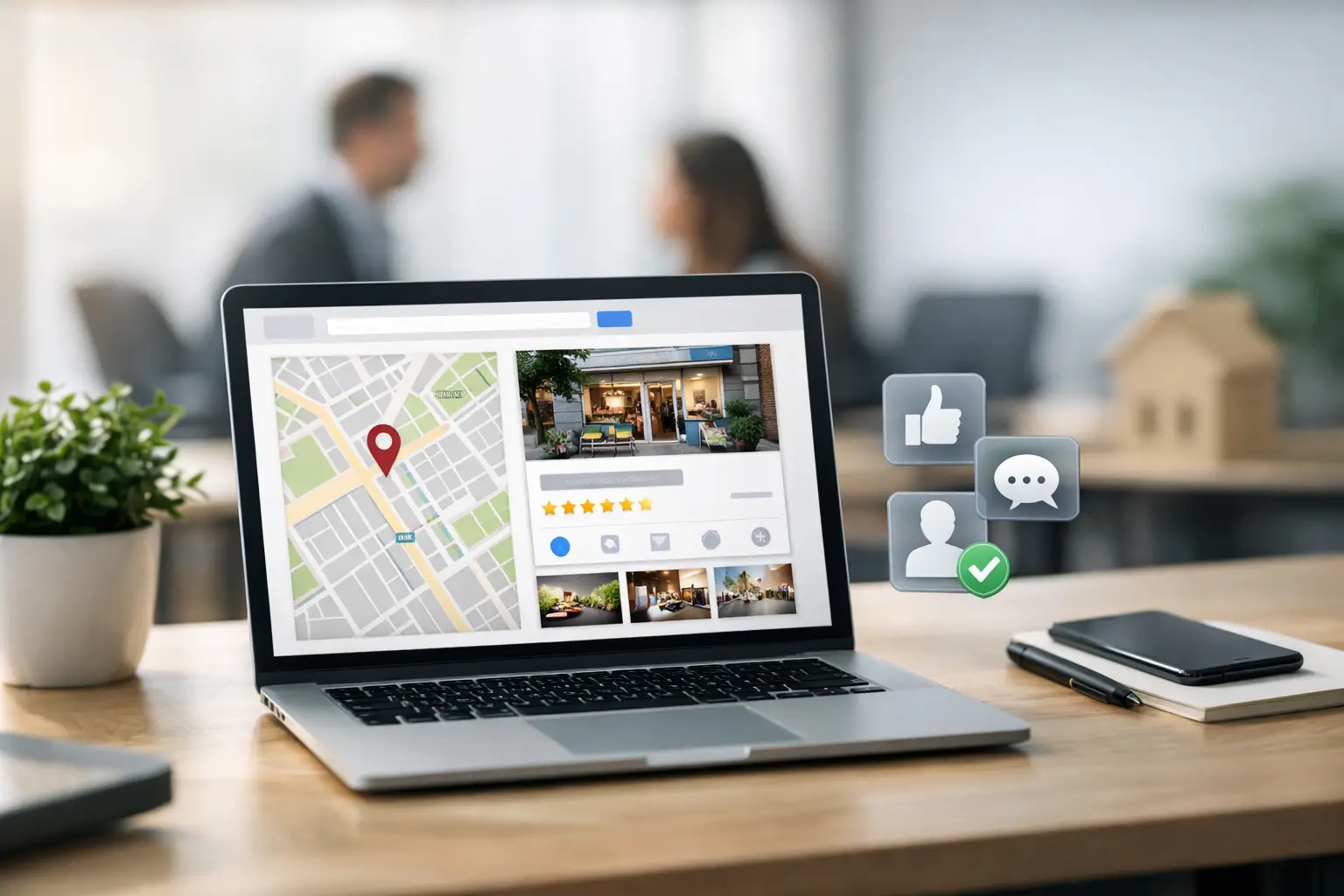
Google also uses profile signals to decide which businesses deserve prominent placement in local results. Relevance, distance, and prominence all matter, but those factors are influenced by how complete, accurate, and active your profile is. Reviews, business categories, service details, photos, posting activity, and website alignment all shape performance.
This is where many businesses fall behind. They claim the profile, enter the basics, and assume the work is done. It is not. A profile that just exists is very different from one built to dominate competitive local search.
What separates a high-performing Google Business Profile
The best profiles do not look flashy. They look credible, complete, and easy to act on.
Start with accuracy. Your business name, address, phone number, hours, and service areas must be consistent with your website and other business listings. If that data is outdated or mismatched, Google gets weaker trust signals and customers get confused. Both problems cost you leads.
Then there is category selection. Your primary category has a major impact on which searches you can compete for. Secondary categories help expand your visibility, but only when they match your actual services. Businesses often choose categories that are too broad or too generic, which weakens relevance. A personal injury lawyer should not optimize like a general law office if that is not where the revenue is. A roofing contractor should not bury its core service behind vague business labels.
Services and descriptions matter too, but not in the way many owners think. Stuffing keywords into every field is not a winning strategy. Google wants useful, truthful information. The strongest profiles explain what you do in plain language while reinforcing the services and locations that matter most.
Photos are another major trust signal. Customers want proof that your business is real, active, and professional. Good images of your team, vehicles, workspace, completed jobs, and exterior signage can improve engagement. Stock-style visuals or random low-quality uploads rarely help.
Reviews are not just reputation – they are ranking fuel
Reviews influence both click behavior and local visibility. That makes them one of the most valuable parts of your Google Business Profile.
Quantity matters, but quality matters more than most businesses realize. A steady flow of recent, detailed reviews sends a stronger signal than a pile of old five-star ratings from three years ago. Reviews that mention specific services, customer experience, and location context can also strengthen relevance.
The response strategy matters too. When you reply consistently and professionally, you show customers that you are engaged and accountable. You also give Google more fresh content tied to your profile. That does not mean every response needs to be long. It means they should be timely, personalized, and aligned with your brand.
There is a trade-off here. Aggressive review requests can produce volume, but if the experience feels forced, customers may ignore them or leave shallow feedback. The better approach is to build review generation into your workflow after a successful appointment, repair, consultation, or completed job.
The biggest Google Business Profile mistakes
The most common problem is treating the profile like a one-time setup task instead of an active lead-generation channel.
Another mistake is incomplete optimization. Businesses skip service sections, choose weak categories, leave photos untouched for months, and fail to publish updates. That creates a stale profile that gives competitors room to pass them.
Some businesses also target the wrong geography. If you are a service-area business, your profile should reflect where you actually work and where you can realistically compete. Trying to appear everywhere usually weakens your local relevance. In local SEO, precision beats wishful thinking.
Keyword abuse is another issue. Adding city names or services unnaturally to fields where they do not belong can create compliance risks and hurt trust. Google Business Profile optimization is not about gaming the platform. It is about sending strong, consistent local signals while making the customer decision easier.
And then there is neglect. Hours change, services expand, staff rotates, and reviews come in. If your profile is outdated, it tells customers your business may be too.
How to improve your Google Business Profile for more leads
The strongest approach is strategic, not random.
First, tighten your foundation. Confirm every core business detail is correct and consistent across your site and local citations. Make sure the primary category reflects the service that drives your best leads, not just the broadest description of your business.
Next, strengthen conversion signals. Add real photos, refine your service descriptions, and make sure your business summary speaks to what customers actually want. Fast response. Trusted expertise. Reliable service. Clear specialties. People scan quickly, so vague language costs attention.
Then focus on proof. Build a system for generating fresh reviews from real customers. Ask at the right moment, make the process simple, and respond to reviews every week. For competitive industries, this is not optional.
After that, stay active. Publish updates, add new photos, monitor questions, and review performance data. Activity alone will not guarantee rankings, but inactive profiles rarely outperform engaged ones over time.
It also helps to connect profile optimization with your broader local SEO strategy. Your website content, location pages, mobile experience, and on-page service signals should reinforce what your profile says. When those assets align, Google gets a clearer picture of your authority in the market.
It depends on your industry – and your local competition
Not every business needs the same optimization depth.
A solo mobile locksmith in a mid-sized market may gain traction faster than a cosmetic surgeon in a major metro where competition is intense and review profiles are mature. A family dental office may need stronger photo and reputation management, while a roofer may need better service-area targeting and seasonal content alignment.
That is why generic advice often falls flat. The right Google Business Profile strategy depends on your category, your service model, your review velocity, and how strong the local pack competitors are in your market. What works for a legal practice may not be enough for an HVAC company competing in a crowded service area.
This is also where specialist execution matters. Businesses that have already worked with broad marketing vendors often find the same problem: plenty of activity, not enough local search movement. A profile needs more than maintenance. It needs competitive positioning.
When to bring in outside help
If your profile is suspended, buried in the map pack, missing from key searches, or generating low-quality traffic, you probably need more than basic cleanup.
An experienced local SEO partner can identify category issues, service-area conflicts, listing inconsistency, weak review strategy, and website-profile misalignment faster than most business owners can on their own. More importantly, they can turn the profile into a real growth asset instead of a digital placeholder.
That is the difference between being present and being chosen.
For businesses that want stronger map visibility, better lead flow, and a partner focused on local search performance, FMS Online Marketing helps turn underperforming profiles into revenue-driving assets.
Your next customer is already searching nearby. The real question is whether your profile gives them a reason to call you first.