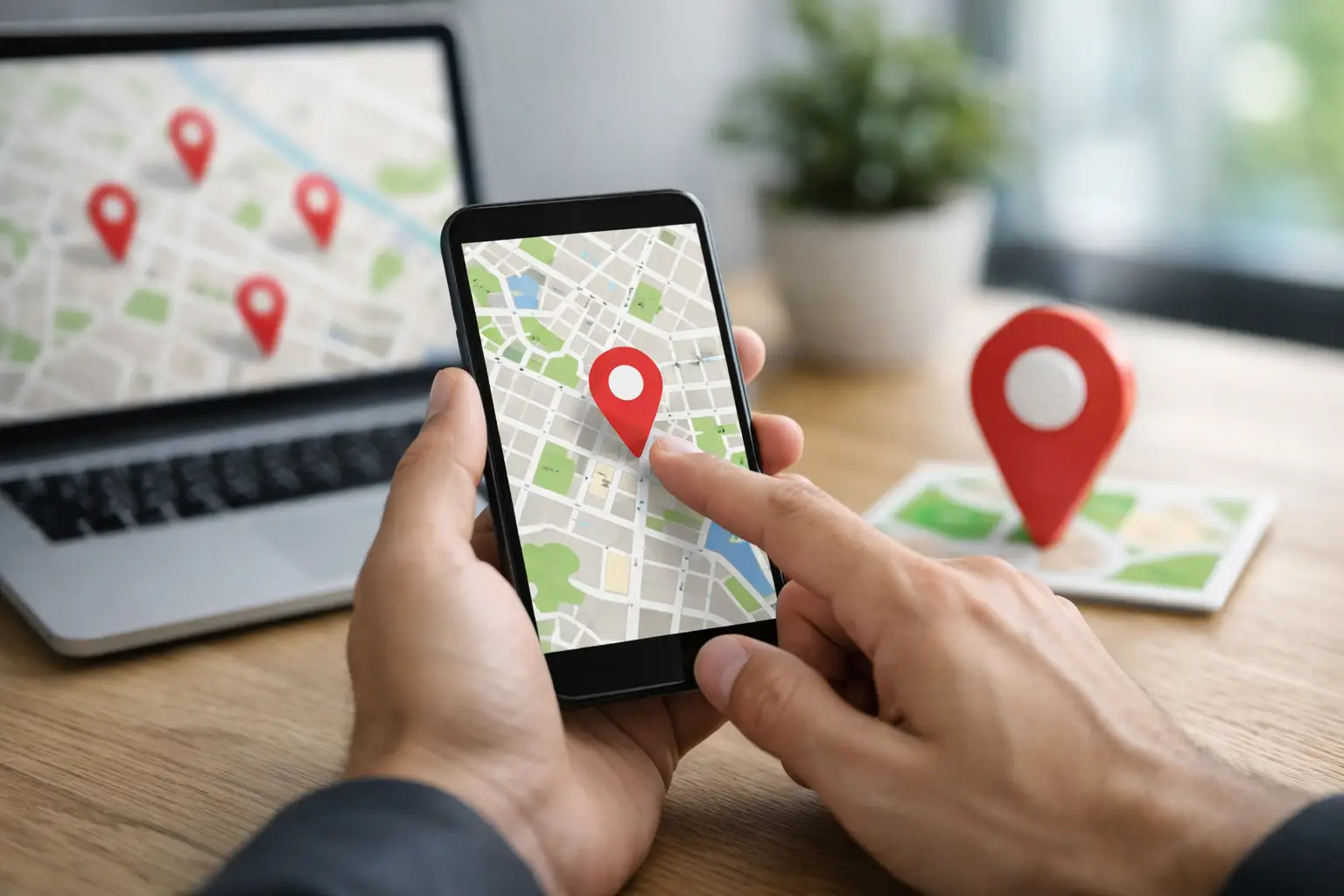
When someone searches for “plumber near me” or “car accident lawyer” on their phone, they are not browsing. They are ready to call, book, or show up. That is why google maps lead generation matters so much for service businesses. It puts your company in front of high-intent local customers at the exact moment they need help.
For HVAC companies, roofers, dentists, auto shops, and law firms, this is not a side channel. It is one of the fastest paths to qualified inbound leads. If your business is missing from the map pack or buried under stronger competitors, you are handing revenue to companies that simply did a better job earning local visibility.
What google maps lead generation actually means
Google Maps lead generation is the process of turning local map visibility into real business opportunities – phone calls, form submissions, direction requests, appointment bookings, and walk-ins. It starts with your Google Business Profile, but it does not end there.
A lot of business owners assume Maps performance is mostly about filling out a profile and collecting a few reviews. That is only part of the picture. Google looks at relevance, distance, and prominence. Relevance is how closely your business matches the search. Distance is self-explanatory. Prominence is where many businesses lose ground, because it reflects your broader local authority, review profile, website strength, and overall trust signals.
If your profile is incomplete, your categories are weak, your reviews are thin, or your website does not support your local intent, you will struggle to generate consistent leads from Maps. Rankings can improve, but conversions still depend on whether your listing gives searchers a clear reason to choose you.
Why Google Maps produces better local leads
Not all traffic is equal. A generic SEO campaign might increase visits, but Google Maps often captures a more urgent type of buyer. These users are usually searching on mobile, comparing a small set of local options, and making decisions fast.
That creates a major advantage for businesses that rank well and present themselves clearly. A strong listing can generate leads before someone ever reaches your website. If your reviews are strong, your hours are accurate, your service areas are clear, and your primary category is dialed in, you can win the call directly from the search results.
This is especially valuable in competitive industries where response time and trust drive revenue. A homeowner with a broken AC does not want to research eight companies. They want the most credible nearby option right now. The same goes for someone needing a tow, an emergency dentist, or a criminal defense attorney.
The core pieces that drive Google Maps lead generation
A high-performing Google Business Profile is the foundation. Your primary category has to match your main service, and your secondary categories should support what you actually offer. Service descriptions need to be clear and local, not stuffed with keywords. Photos should build confidence, not just fill space.
Reviews are another major factor. Quantity matters, but quality and recency matter too. A steady review flow tells Google and potential customers that your business is active and trusted. More importantly, detailed reviews that mention services, location, and customer experience help strengthen relevance and improve conversion.
Then there is the website. This is where many agencies miss the mark. Your website should reinforce your Maps presence with strong local landing pages, consistent contact information, service-area alignment, and content that supports the searches you want to rank for. If your listing says one thing and your website says another, Google sees friction. So do customers.
Local citations still play a supporting role as well. Your business name, address, phone number, and core profile details need to be accurate across major directories and data sources. Citation consistency alone will not carry a campaign, but inconsistency can absolutely hold one back.
Why rankings alone are not enough
A top-three map pack position looks great on paper, but weak conversion elements can waste that visibility. This is where a lot of local businesses get frustrated. They improve ranking, yet lead volume stays flat because the listing does not do enough to earn action.
Your business name may be visible, but do your reviews answer the concerns buyers actually have? Do your photos make you look established and professional? Are your business hours reliable? Are your services easy to understand? Are you using posts, Q&A, and profile features to eliminate hesitation?
Lead generation happens when visibility and trust work together. One without the other limits growth. That is why the best Maps strategy is not just about showing up. It is about showing up as the obvious choice.
Common reasons local businesses fail in Google Maps
The most common issue is treating Google Business Profile as a one-time setup instead of an active sales asset. Profiles need regular updates, review management, image improvements, service refinement, and ongoing monitoring. Competitors are not standing still, and neither is Google.
Another problem is category confusion. Businesses often choose broad or inaccurate categories, which makes it harder for Google to match them to the right searches. A roofing company that weakens its primary relevance with poor categorization can lose ground to a less established competitor with a sharper setup.
Spam and proximity also complicate the landscape. In some markets, you are competing against listings with keyword-stuffed names, fake addresses, or aggressive tactics. That does not mean you should copy bad practices. It means you need a stronger overall local SEO strategy that can compete cleanly and hold up over time.
There is also the issue of poor follow-through. Even strong lead generation can underperform if calls go unanswered, forms sit untouched, or staff do not know how to handle inbound leads. Maps can deliver opportunity, but your operation has to convert it.
How to improve your Google Maps lead generation
Start by tightening your Google Business Profile. Make sure your primary category is exact, your services are complete, your business description is focused, and your photos reflect the quality of your work. Add real images of your team, location, vehicles, and completed projects where relevant. Trust is visual.
Next, build a review process that runs consistently. Ask happy customers at the right moment, make it easy for them, and respond to reviews with professionalism. A business with 150 strong, recent reviews has a major advantage over one with 22 outdated comments from two years ago.
Then strengthen the website behind the listing. Every important service should have a clear page. Every city or service area you actively target should be supported by content that makes sense for that market. This is where strategic local SEO turns Maps from an isolated listing into a full lead generation engine.
You also need measurement. Track calls, form fills, direction requests, and profile interactions. Look beyond vanity metrics and ask the real question: are these map impressions turning into booked jobs and revenue? If not, diagnose where the drop-off happens.
For many businesses, this is the point where a specialist matters. Local SEO is not generic SEO with a city name added. Google Maps lead generation requires precise execution across your profile, website, reviews, citations, and conversion path. That is why businesses that want to dominate local search usually perform better with a partner focused on this space, not a generalist trying to cover everything.
What results should you expect?
It depends on your market, your competition, your review profile, and how much authority your business already has. A newer company in a crowded metro area will not move at the same pace as an established practice in a less competitive suburb. That said, well-executed Maps optimization can produce meaningful gains faster than many broader SEO efforts because it targets buyers closer to action.
Some businesses see early improvement through better profile optimization and review growth. Others need deeper work across their site and local signals before rankings and lead flow really move. The key is setting the right expectations and building around outcomes, not shortcuts.
If your goal is more calls from nearby customers who are ready to buy, Google Maps is too valuable to treat casually. The businesses winning there are not getting lucky. They are building local relevance, authority, and trust with purpose. That is how map visibility turns into real growth, and why the right local strategy keeps paying long after the first ranking jump.