A local landing page should do more than mention a city name and hope Google connects the dots. If your page is meant to bring in calls, booked jobs, or consultations, you need to know how to optimize local landing pages so they rank in the right market and persuade real people to take action once they arrive.
That is where a lot of businesses get stuck. They build one page for every city, swap out the location name, and end up with thin content that does not rank well and does not convert well. Local SEO is more competitive than that, especially for service businesses in markets where every lead has real revenue attached to it.
What makes a local landing page actually work
A strong local landing page has two jobs. First, it needs to help search engines understand where you work and what service you provide. Second, it needs to convince a nearby searcher that your business is the right choice.
If either piece is weak, the page underperforms. You can have solid optimization and still lose leads if the page feels generic. You can also have great sales copy that never gets visibility because the local relevance signals are too weak. The best pages balance rankings and conversions.
For most local businesses, that means each page should be built around one core service in one target area. A plumber targeting drain cleaning in Tempe should not try to turn the same page into a catch-all for water heaters, leak repair, sewer work, and every nearby city. The more focused the page is, the easier it is to match search intent.
How to optimize local landing pages without creating doorway pages
Google has been clear about low-value location pages. If your city pages are nearly identical and exist only to capture search traffic, they can look like doorway pages. That is a problem for rankings and for trust.
The fix is not to avoid local landing pages. The fix is to make each one genuinely useful.
Start with unique page intent. If you serve multiple areas, each page should reflect what customers in that area actually care about. That may include response times, common service issues, local regulations, neighborhood coverage, traffic patterns, weather-related needs, or the type of properties you usually work on.
For example, an HVAC company may write very different local content for a dense urban area versus a suburban service area with larger homes and older duct systems. A optimize local landing pages may highlight courthouse proximity, local case familiarity, or consultation logistics based on the market. Those details create a real difference between pages.
You also need original proof points. Testimonials from customers in that area, photos from nearby jobs, and examples tied to the location make the page stronger. Search engines pick up on relevance, but customers pick up on authenticity. You need both.
Build the page around one primary local keyword
If you want better results, stop trying to rank one page for everything. Choose a clear primary keyword that combines service and location, then support it naturally throughout the page.
That usually means putting the keyword in the title tag, main heading, opening paragraph, meta description, and a few body sections. It should also appear in image alt text where appropriate and in the URL slug if the site structure supports it.
But there is a trade-off here. Overusing the keyword makes the page read like spam. That hurts user trust and can weaken performance. A page written for actual customers will naturally include variations such as “near me,” neighborhood names, service modifiers, and related problems the customer is trying to solve.
If the target term is “roof repair in Mesa,” the page can also mention storm damage, tile roofs, leak repair, emergency response, and specific neighborhoods in Mesa where you work. That gives the content semantic depth without forcing the exact same phrase into every paragraph.
The page structure should support local intent
Good local landing pages are easy to scan because local searchers are usually making fast decisions. They want to know whether you offer the service, whether you serve their area, and whether they can trust you.
A simple structure works best. Lead with a clear headline that states the service and location. Follow it with a short section that explains the value of choosing your business in that market. Then move into the details that support both rankings and conversion.
Include location-specific service details
This is where many pages stay too vague. Instead of saying you proudly serve the area, explain how your service fits local demand. A roofing company can mention heat exposure, monsoon damage, or insurance-related repair needs. A dental office can mention convenience for families in specific neighborhoods or office access near major roads.
These details help the page feel grounded. They also improve relevance for long-tail searches that carry strong buying intent.
Show proof that you work in the area
Trust signals matter on every landing page, but they matter even more in local search. People want confidence that you are established, accessible, and experienced in their market.
Use reviews, short case examples, before-and-after references, certifications, and local service mentions where they fit naturally. If your business has completed projects in the area, say so. If your team knows the common issues local customers deal with, show it.
This is also where your contact details need to be clean and consistent. Your business name, phone number, and service area information should align with your broader local SEO presence, especially your Google Business Profile.
Conversion elements need to match the searcher’s urgency
Ranking is only half the job. If the page does not convert, it is not doing enough for the business.
Local landing pages perform better when the call to action matches the service. A personal injury lawyer may need a consultation-focused message. A towing company needs urgency. A medical practice may need appointment scheduling and insurance reassurance. A plumber may need a strong same-day service angle.
Keep the next step obvious. Calls, form fills, booked estimates, and appointment requests should be easy to find on mobile and desktop. If the page forces users to hunt for contact options, you lose momentum.
It also helps to reduce friction. Mention hours, response time, financing, insurance acceptance, emergency availability, or service guarantees when those factors influence decisions. These are not just conversion details. They are often the reason one local business gets the lead and another one does not.
Technical SEO still matters on local pages
You can write a persuasive page and still hold it back with weak technical execution. Local landing pages need the basics done right.
Fast load times matter because many local searches happen on mobile. A slow page loses impatient users quickly. Mobile formatting matters because most local service traffic is not browsing casually from a desktop. Clear heading structure helps search engines understand the page. Schema markup can strengthen local business context. Internal linking from relevant service and location pages can support crawlability and authority.
There is also a common mistake worth avoiding. Do not create dozens of local pages and leave them isolated. If your site architecture does not connect them logically, they are harder for users and search engines to navigate. Your local content should feel like part of a deliberate growth strategy, not a pile of disconnected pages.
Measure performance by leads, not just rankings
A page that moves from position nine to position four is making progress, but rankings alone do not tell the full story. The real question is whether the page is generating qualified local leads.
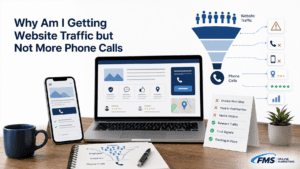
Track calls, forms, booked appointments, and engagement metrics by page. Watch how users move through the content. If a page gets traffic but no action, the issue may be weak trust signals, poor calls to action, or a mismatch between the keyword and the offer. If it does not get impressions, the issue may be relevance, authority, or thin content.
This is where local SEO gets more strategic. Sometimes a lower-volume local keyword converts far better than the broad term everyone wants. Sometimes one city page deserves stronger investment because it drives higher-value jobs. Not every location has equal opportunity, and not every page should be optimized the same way.
The businesses that win treat local pages like sales assets
The biggest shift is this: stop thinking of local landing pages as placeholders for SEO. They are revenue pages. When built correctly, they help your business dominate local search results, support map visibility, and turn nearby searchers into paying customers.
That takes sharper targeting, better content, stronger proof, and cleaner technical execution than most businesses expect. It also takes discipline. If every page says the same thing, Google sees it and customers do too.
When you optimize with intent, each page becomes a stronger entry point into your business. And when enough of those pages start pulling their weight, local search stops being unpredictable and starts becoming a real growth channel.