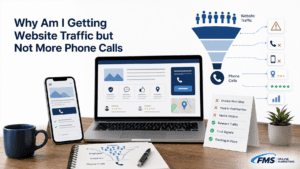
A lot of local businesses do the hard part first – they get found. Then they lose the lead in the last 30 seconds.
That is the real problem behind how to improve local search conversions. Visibility matters, but rankings alone do not grow a service business. Calls, form fills, booked appointments, and qualified walk-ins do. If your business shows up in Google Maps or local organic results but searchers are not taking action, the issue is not reach. It is conversion friction.
For service-based businesses, local search traffic is some of the highest-intent traffic you can get. These people are not browsing for entertainment. They need a roofer, a dentist, an HVAC company, a lawyer, or an auto shop near them, and they need one soon. The businesses that win are the ones that make the next step obvious, fast, and trustworthy.
How to Improve Local Search Conversions Starts With Search Intent
Not every local click has the same value. Someone searching “emergency plumber near me” is very different from someone searching “how to fix low water pressure.” One is ready to hire. The other may just be researching.
If you want better conversion rates, your local presence has to match the intent behind the search. High-conversion local search usually comes from queries tied to immediate action, specific services, and geographic relevance. That means your Google Business Profile, service pages, and landing pages should reflect what people are actually trying to do, not just what keywords you want to rank for.
This is where many businesses miss the mark. They build generic pages that talk broadly about the company, but they do not answer the searcher’s real question: Can you solve my problem in my area, and can I trust you enough to contact you right now?
Your Google Business Profile Is a Conversion Asset
Your Google Business Profile is not just a listing. It is often your first sales page.
When a local searcher sees your profile in the map pack, they are making a fast decision based on a few signals: category relevance, review quality, business description, photos, service details, hours, and how easy it is to call. If any of those elements feel incomplete or outdated, your conversion rate drops before the person ever reaches your website.
A strong profile needs accurate categories, service descriptions that reflect high-intent searches, and photos that make the business feel real and active. Reviews matter just as much for conversion as they do for rankings. A business with 200 reviews and recent responses usually gets more trust than a business with 20 reviews and months of silence, even if both appear in the same local result set.
There is also a practical side to this. If your hours are wrong, if your phone number is hard to tap on mobile, or if your service areas are unclear, you create hesitation. In local search, hesitation costs leads.
Reviews Should Reduce Risk, Not Just Raise Ratings
A five-star average looks good, but review strategy goes deeper than star count.
People use reviews to answer specific buying concerns. Will this company show up on time? Do they communicate well? Are they overpriced? Do they handle emergencies? Are they professional inside a customer’s home or office? The best reviews reduce those fears. That is why businesses should not just chase volume. They should generate reviews that mention actual services, neighborhoods, response times, and outcomes.
For example, an HVAC company benefits more from reviews that mention same-day AC repair, technician professionalism, and fair pricing than from vague praise. Improve local search conversions benefits from reviews that speak to communication, responsiveness, and trust. Specificity converts.
Responding to reviews also matters. It shows the business is engaged, accountable, and active. That is especially important in competitive markets where multiple providers appear similar at first glance.
Your Website Has One Job After the Click
Once someone clicks through from local search, your website should move them toward action without making them think too hard.
This is where many local businesses underperform. They send traffic to cluttered homepages, slow mobile pages, or generic service pages with weak headlines and no clear next step. If the visitor has to hunt for your phone number, scroll past stock content, or guess whether you serve their area, your conversion rate will suffer.
A high-converting local page needs clarity right away. The headline should confirm the service and location relevance. The copy should quickly explain what you do, who you help, and why customers trust you. The call to action should be visible without forcing the visitor to search for it.
Trust signals do heavy lifting here. Reviews, before-and-after examples, certifications, service guarantees, years in business, and local proof all help the visitor feel safer about contacting you. For a medical practice, that may mean provider credentials and patient experience cues. For a roofer, it may mean insurance details, project photos, and financing options. Conversion strategy is not one-size-fits-all. It depends on what your buyers need to believe before they act.
Mobile Experience Is Usually the Deciding Factor
Most local searches happen on mobile, especially for urgent services. That means mobile design is not a secondary concern. It is the main environment where conversions happen.
If your local landing pages load slowly, bury the call button, use small text, or force users through a complicated form, you are losing ready-to-buy traffic. A strong mobile experience makes calling, requesting service, or booking an appointment feel effortless.
The best-performing local pages usually keep forms short, place click-to-call options prominently, and remove distractions. They do not ask for twelve fields when four will do. They do not hide key information under layers of navigation. They make the next step easy because local buyers often make decisions fast.
This is especially true in industries where the need is immediate. Someone with a broken AC unit in Arizona is not looking for a lengthy brand story. They want fast confidence and a fast path to contact.
How to Improve Local Search Conversions With Better Message Match
Message match is simple. The promise in the search result should match the experience after the click.
If your Google Business Profile highlights emergency service, the landing page should reinforce emergency availability. If the searcher clicks on a page about brake repair, they should not land on a broad auto services page and be forced to keep digging. If your title tag says same-day plumbing in a specific city, the page should support that claim with relevant content.
This alignment improves conversions because it removes doubt. It tells the visitor they are in the right place. It also prevents the common drop-off that happens when a business ranks for local intent but sends traffic to pages built for SEO rather than buyers.
A page can rank and still fail. That is the hard truth many business owners discover after investing in traffic growth without conversion strategy.
Strong Calls to Action Beat Clever Copy
Local search conversion depends on momentum. Once a prospect is interested, your job is to direct that interest into action.
That usually means one or two primary calls to action, not six competing options. Call now, request an estimate, book an appointment, or schedule service are all strong if they fit the business model. What matters is clarity. Vague buttons like “learn more” rarely perform as well when the buyer is already near the bottom of the funnel.
It also helps to reduce uncertainty around what happens next. Tell people whether they will get a callback in 15 minutes, same-day scheduling, or a free estimate. When buyers know what to expect, they convert more often.
There is a trade-off here. Some businesses try to capture every type of lead with chat, long forms, financing applications, newsletter prompts, and multiple booking paths on the same page. More options can feel comprehensive, but they often lower conversions. Simplicity wins when intent is high.
Local Proof Builds the Final Layer of Trust
General credibility is useful, but local proof is what often closes the gap.
People want to know that you work in their area and understand their needs. That can show up through city-specific service pages, localized testimonials, project examples, and clear service area coverage. It can also come from photos of real work, staff, and branded vehicles instead of generic stock imagery.
This is one reason specialist local SEO work consistently outperforms generic digital marketing. The more your local presence reflects real service delivery in real markets, the easier it is for nearby searchers to trust you.
For businesses in competitive metro areas like Phoenix, that local trust signal becomes even more important. Searchers often see several similar providers in the same results. The one that feels most established, most relevant, and easiest to contact usually gets the lead.
Measure Conversions the Right Way
If you want to improve performance, track what counts. Rankings are useful, but they are not the finish line.
You need visibility into calls from Google Business Profile, form submissions, appointment requests, direction requests, mobile click-to-call activity, and landing page conversion rates. Without that data, it is easy to misread what is working. A page with lower traffic may produce more revenue if it attracts better intent and converts at a higher rate.
This is also where AI-driven analysis can help. Patterns in reviews, search behavior, call trends, and page engagement can reveal where local buyers are dropping off. The goal is not to chase vanity metrics. It is to remove friction and create a smoother path from local search to paying customer.
Improving local search conversions is not about one trick or one tool. It comes from building a local presence that earns the click, confirms trust, and makes action easy. When those pieces work together, local visibility stops being just traffic and starts becoming revenue.