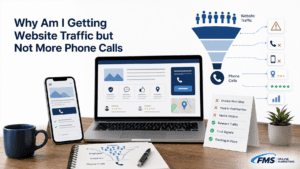
Most local businesses do not have a traffic problem. They have a lead quality problem. If you want to know how to get local leads from SEO, the goal is not chasing more clicks for the sake of reports. The goal is showing up when nearby customers are ready to call, book, or request a quote.
That changes the strategy completely. A plumber does not need random blog traffic from three states away. A personal injury lawyer does not need impressions for broad national terms. An HVAC company needs to appear in local search at the exact moment someone types AC repair near me, emergency furnace service, or best HVAC company in their city. That is where real local SEO wins happen.
How to get local leads from SEO starts with intent
There is a major difference between visibility and lead generation. Plenty of businesses rank for terms that look impressive in a monthly report but do very little for revenue. Local lead SEO starts with high-intent searches – the terms people use when they already know they need a service.
That usually means targeting searches tied to a city, neighborhood, or immediate need. Think water heater repair in Mesa, brake shop near me, family dentist in Chandler, or roofing contractor in my area. These searches come from people much closer to taking action. If your site, Google Business Profile, and local signals are aligned around those searches, you stop competing for vanity traffic and start competing for booked jobs.
This is also where many agencies get it wrong. They chase broad rankings because they are easier to sell. But local businesses do not grow from ranking for marketing terms. They grow from owning the searches that bring calls and appointments.
Google Business Profile is your lead engine
For many service businesses, the fastest path to more local leads is not your homepage. It is your Google Business Profile. When someone searches for a local service, Google often shows the map pack before the traditional organic results. If you are not visible there, you are missing a huge share of high-intent leads.
A well-optimized profile does more than help you appear. It helps convert. Your primary category, secondary categories, service descriptions, business hours, service areas, photos, review activity, and business updates all influence both visibility and trust. When a searcher sees a complete profile with strong reviews and accurate service information, the distance between search and contact gets much shorter.
There is some nuance here. If you are in a less competitive market, a decent profile can still produce leads. In competitive industries like legal, HVAC, roofing, and medical, average optimization will not carry you very far. You need consistent review generation, tightly matched categories, strong engagement signals, and a profile that clearly reflects what you want to rank for.
Your website has to support local rankings
Google Business Profile can drive a lot of action, but it does not work in isolation. Your website gives Google the supporting evidence that your business is relevant, credible, and locally connected. If your profile says one thing and your website says another, your visibility suffers.
This is where location pages and service pages matter. If you serve multiple cities, each core location should have a page built around that market and the services offered there. If you offer multiple high-value services, those services need dedicated pages that speak clearly to what customers are searching for.
Thin pages will not do the job. A page that simply swaps out the city name is weak and easy to spot. Strong local pages explain the service, the problem it solves, the area served, and what makes your business the right choice. They also need the basics handled correctly – title tags, headers, local keywords, mobile usability, and fast load times.
For example, a roofing company should not rely on one generic services page. It should have clear pages for roof repair, roof replacement, storm damage roofing, and emergency roofing service, with local relevance built into the copy where it fits naturally. That gives Google more confidence and gives customers a better path to conversion.
Reviews do more than build trust
Business owners often think of reviews as a reputation tool. They are that, but they are also a ranking and conversion asset. Reviews help reinforce local relevance, improve click-through rates, and influence whether a prospect contacts you or keeps scrolling.
Quantity matters, but quality and consistency matter more. A business with a steady stream of fresh reviews that mention specific services and customer experiences usually outperforms a business that got fifty generic reviews two years ago. Google wants signs that the business is active, trusted, and still delivering results.
You should also pay attention to where reviews support the buying decision. A lawyer may benefit from reviews that speak to communication and outcomes. An auto shop may need reviews that mention honesty, speed, and fair pricing. A dental office may need reviews focused on staff professionalism and patient comfort. The same five-star rating can carry very different weight depending on the service.
Local content should answer buying-stage questions
A lot of businesses hear content marketing and assume that means writing endless blog posts. That is not the point. For local SEO, content should help you rank for searches tied to real customer decisions.
That might include pages or articles around pricing questions, service comparisons, common emergencies, timelines, insurance questions, or what to expect before booking. These topics work because they line up with what real prospects ask before they contact a business.
A personal injury firm might publish content around how long a claim takes in Arizona. A plumber might address the signs a water heater needs replacement. An HVAC company might explain whether to repair or replace an aging unit. These are not academic topics. They sit close to the sale.
There is a trade-off, though. Informational content alone does not guarantee leads. If it is disconnected from your service pages, local targeting, and conversion path, it can attract traffic without producing much business. The right approach is content that supports local commercial intent, not content created just to fill a calendar.
Technical SEO matters when the lead is on a phone
Most local searches happen on mobile devices, often in moments of urgency. That means technical SEO is not a back-end checklist item. It directly affects lead flow.
If your site loads slowly, buttons are hard to tap, phone numbers are not clickable, or forms are clunky, your rankings may hold up better than your conversions. Local SEO works best when the path from search to contact is frictionless.
You also need clean site structure, crawlable pages, consistent business information, and schema where appropriate. None of this is flashy, but it helps search engines understand your business and helps users take action faster. When someone needs a towing company, dentist, or criminal defense attorney, patience is limited. A few seconds of confusion can cost you the lead.
How to get local leads from SEO in competitive markets
In competitive markets, the answer is not one tactic. It is layered execution. You need a strong Google Business Profile, location relevance, service depth, review velocity, local citations, technical performance, and pages built to convert. Weakness in one area can drag down the whole system.
This is why local SEO feels inconsistent for many businesses. They may have a nice website but a neglected profile. Or plenty of reviews but weak location pages. Or solid rankings with low conversion because the site does not make it easy to contact the business. Local lead generation is rarely about one missing trick. It is usually about missing alignment.
That is where a specialist matters. A focused local SEO strategy is built around calls, forms, and appointments, not just keyword movement. Agencies like FMS Online Marketing understand that the real target is not abstract traffic growth. It is local search dominance that turns nearby searchers into customers.
Measure leads, not just rankings
If you want SEO to produce revenue, you need to track the right outcomes. Rankings are useful, but they are not the finish line. You should be measuring calls from Google Business Profile, form submissions, booked appointments, direction requests, and the service pages that actually influence leads.
You should also look at lead quality by location and keyword theme. Some terms bring volume but weak prospects. Others bring fewer leads but better close rates and higher job value. That distinction matters. A local SEO campaign should help you attract more of the right work, not just more activity.
The businesses that win locally are usually not the ones doing the most. They are the ones doing the right things consistently, with a strategy tied to buyer intent, map visibility, and conversion. If your SEO is not bringing in qualified local leads, it is time to stop treating traffic as success and start building for the searcher who is ready to become your next customer.