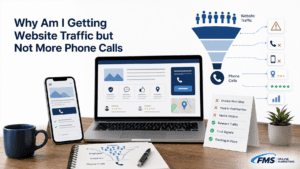
If your Google Business Profile gets views but your phone is still quiet, the problem usually is not demand. It is positioning. Business owners who want to know how to get more Google Business calls need to focus less on vanity metrics and more on the signals that make a searcher trust you enough to tap Call now.
That means treating your profile like a lead-generation asset, not a directory listing you set up once and forget. Calls come from visibility, relevance, and trust working together. Miss one of those, and even a well-ranked profile can underperform.
How to get more Google Business calls starts with intent
Not every Google Business Profile click is equal. A person searching for “AC repair near me” at 2 p.m. in July is very different from someone casually browsing service options on a Sunday night. If you want more calls, your profile has to match high-intent local searches and remove friction when people are ready to act.
That starts with choosing the right primary category. This is one of the strongest local ranking signals in your profile, and many businesses get it wrong. A how to get more google business calls should not hide behind a broad “Law Firm” category if “Personal Injury Attorney” fits better. An HVAC company should not settle for a vague category if a more accurate one exists. Secondary categories matter too, but your primary category carries the most weight.
Your business description should also do real work. This is not the place for filler. State what you do, who you serve, and what makes your business the right choice. Keep it plain and persuasive. If you offer emergency service, same-day appointments, financing, or a niche specialty, say so. People scanning profiles are looking for reasons to call now, not read marketing fluff.
Build a profile that converts, not just ranks
A higher ranking helps, but rankings alone do not guarantee phone leads. Conversion details inside the profile matter just as much.
Start with your phone number. Use a local, answered line whenever possible, and make sure it connects directly to the team that can book or qualify leads. If calls go unanswered, roll to voicemail, or bounce between departments, your profile is losing money.
Hours are another major factor. Accurate regular hours are essential, but so are holiday hours and special hours. Searchers do notice when a profile looks neglected. If your profile says open and nobody answers, trust drops fast. If you offer after-hours or emergency availability, reflect that clearly.
Photos influence calls more than many owners realize. Strong images make your business feel active, established, and real. Service vehicles, staff, exterior signage, reception areas, treatment rooms, completed jobs, and before-and-after work all help. Stock-looking images do not. For service businesses, authenticity wins.
Then there are Google Business Profile attributes. These can support conversion when they match what customers care about. Depending on your category, attributes like online appointments, onsite services, wheelchair accessibility, women-owned, or veteran-owned may help someone choose you over a competitor. They are not magic, but they do add context that can tip a decision.
Reviews drive calls when they reduce hesitation
If you want to know how to get more Google Business calls, look closely at your reviews. Not just the star rating, but the content, recency, and consistency.
A profile with 150 reviews from three years ago is often weaker than one with steady, recent feedback. Searchers want proof that your business is active now. They also want reviews that mention the actual services they need. A roofing company does not benefit as much from generic praise as it does from reviews that mention roof replacement, leak repair, storm damage, and insurance help.
This is where review strategy matters. Ask satisfied customers for reviews soon after the job, visit, or case milestone while the experience is still fresh. Make the request simple. Do not beg for five stars. Ask for honest feedback and make it easy to leave.
Responding to reviews is just as important. A strong response reinforces credibility for future customers, not just the reviewer. Thank people specifically. Mention the service when appropriate. Address negative feedback calmly and professionally. A defensive response can cost you calls. A measured one can actually strengthen trust.
Posts, Q&A, and updates keep your profile active
Google rewards complete, active profiles, but more importantly, customers do too. Regular updates signal that your business is engaged.
Google Posts are not the biggest ranking factor, but they can support action. Use them to highlight seasonal services, limited-time offers, financing options, common service problems, or timely advice. A plumbing company might post about frozen pipe prevention in winter. A med spa might post about popular treatment timelines before summer. Relevance matters more than frequency for its own sake.
The Q&A section is often ignored, and that is a mistake. It is a chance to answer the practical questions that stop people from calling. Do you offer free estimates? Do you work weekends? Do you accept same-day appointments? Do you handle insurance claims? Do you serve nearby cities? When those answers are visible, hesitation drops.
Services and products should also be filled out thoroughly. Add specific service names, not just broad labels. For local SEO and conversion, detail helps. “Brake repair” beats “auto services.” “Emergency water heater repair” beats “plumbing.” The closer your profile language matches real searches, the better.
Local SEO around your profile affects phone volume
Your Google Business Profile does not operate in isolation. If you are serious about getting more calls, your website, local citations, and location signals need to support it.
Your website should reinforce the same business name, address, phone number, and service focus shown in your profile. Inconsistencies create confusion for Google and for customers. Your service pages should target the real terms buyers use in your market, especially high-intent local keywords tied to specific services and cities.
Citations still matter because they help validate business information across the web. If your phone number or address is wrong on major directories, trust signals weaken. This does not mean chasing every listing site. It means keeping your core business data accurate where it counts.
Location relevance also matters. If you serve multiple cities but only optimize for your home base, you may limit call opportunities. On the other hand, claiming cities you do not truly serve can backfire. The right strategy depends on your service radius, competition, and industry.
This is where specialists have an edge. Agencies like FMS Online Marketing focus on local search performance with the level of precision most general SEO vendors miss. For service businesses that depend on phone leads, that difference is not academic. It shows up in booked jobs.
Better rankings can still produce weak call volume
Sometimes a business ranks well and still gets fewer calls than expected. Usually, one of three things is happening.
First, the market may be crowded with stronger trust signals. If three competitors have more reviews, sharper photos, and more convincing service details, your profile can get skipped even if it appears nearby.
Second, your offer may not be obvious. If a customer cannot quickly tell whether you handle their problem, they move on. Profiles need clarity. What exactly do you do, and why should someone contact you now?
Third, your business may be showing for lower-intent searches. More visibility is not always better if it brings the wrong audience. That is why category selection, service setup, review language, and website alignment all matter. They help Google connect your profile with buyers, not just browsers.
What to fix first if you need calls fast
If your goal is immediate improvement, start with the elements most likely to affect both ranking and conversion. Tighten your primary category and secondary categories. Rewrite your description to emphasize services and differentiators. Upload real, current photos. Audit your reviews and begin asking for new ones consistently. Add or refine services. Check your hours. Answer every review. Update Q&A with your most common pre-call questions.
Then look beyond the profile. Make sure your local landing pages, citations, and phone handling process support the traffic you are earning. There is no benefit in generating more calls if your team misses them, responds slowly, or cannot convert them.
The strongest local businesses do not treat Google Business as a side task. They manage it like a revenue channel. That is the real shift. When your profile is built to rank, persuade, and capture demand at the exact moment people need help, more calls follow. And for most local service companies, that is where growth starts getting very real.