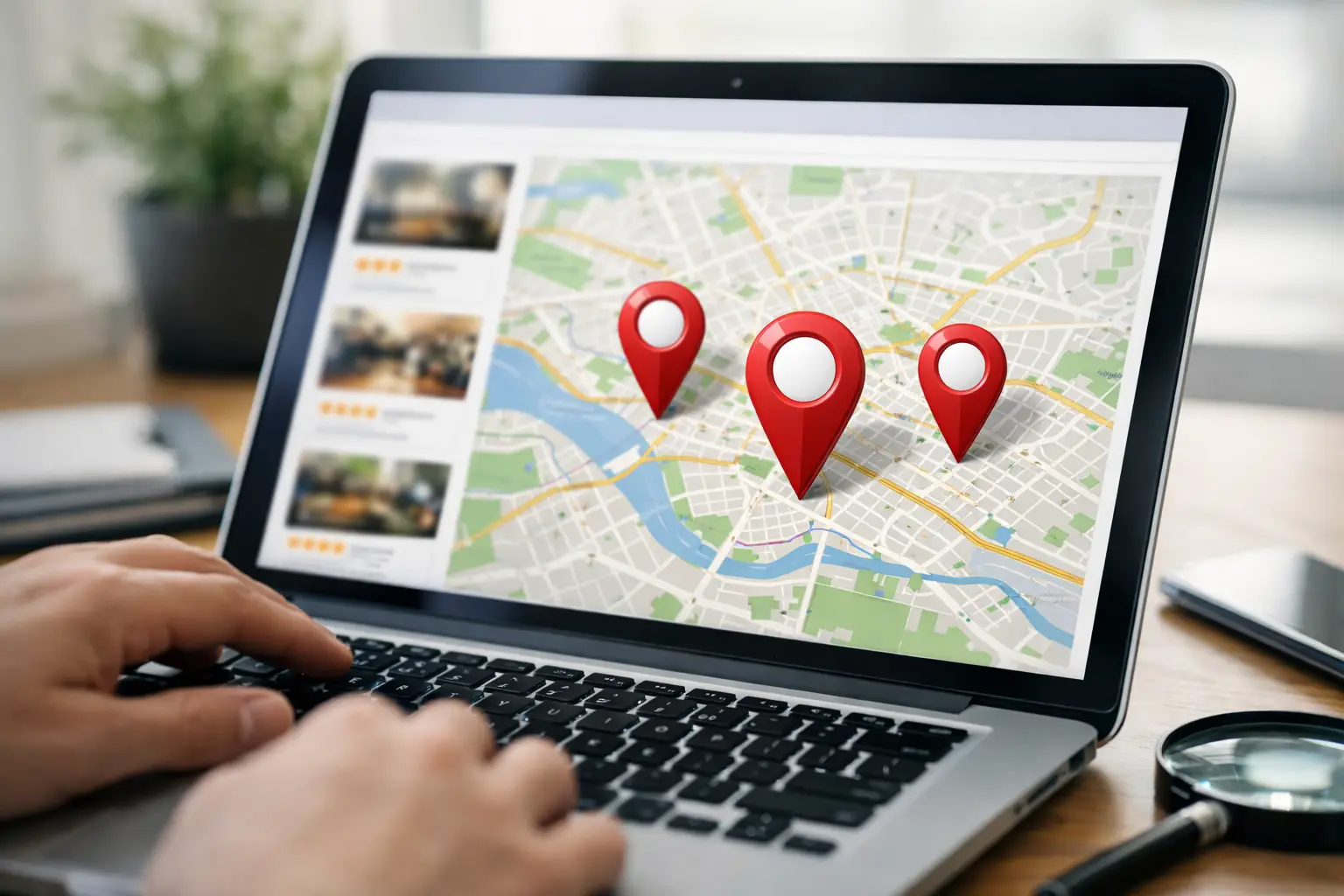
Most local businesses do not have a traffic problem. They have a visibility problem right where buying intent is highest – the map pack. When someone searches for a plumber, dentist, roofer, or attorney near them, those top map listings get the calls. If you want to know how to increase map pack visibility, the answer is not one trick. It is a focused local SEO system built to earn trust, relevance, and proximity signals that Google can verify.
Why map pack visibility matters more than rankings alone
A standard organic ranking can help with awareness, but the map pack captures searchers who are ready to act. These users are often on mobile, comparing hours, reviews, distance, and credibility in seconds. If your business is not showing there consistently, you are losing high-intent leads to competitors that may not even have a better service – just a better local presence.
That is why map pack SEO deserves its own strategy. Google looks at local signals differently than it does for traditional organic search. Your website still matters, but your Google Business Profile, review profile, business consistency, service relevance, and local authority carry serious weight.
How to increase map pack visibility with the right foundation
The first step is getting your Google Business Profile fully built out and actively managed. Too many businesses claim the profile, add a phone number, and stop there. That leaves money on the table.
Your primary category needs to match your core revenue-driving service. If you are an HVAC company, choosing a broad or inaccurate category can weaken your relevance. Secondary categories should support adjacent services, but they should not turn your profile into a catch-all. Precision wins here.
Your business name, address, and phone number also need to match exactly across major directories and local citations. Even minor inconsistencies can create trust issues in Google’s local ecosystem. This is not glamorous work, but it is foundational. A business with conflicting information sends weak signals, and weak signals rarely dominate the map pack.
Just as important, fill out every useful field in your profile. That includes services, service areas, hours, business description, appointment options, and attributes where relevant. Completeness alone will not push you to the top, but an incomplete profile often makes it harder to compete.
Reviews are a ranking signal and a conversion signal
If you want stronger map pack visibility, you need a review strategy that is steady, ethical, and tied to real customer experiences. Quantity matters, but quality and recency matter too. A business with 25 recent, detailed reviews can outperform one with 200 old, generic ones.
Ask for reviews as part of your normal customer follow-up process. Make it easy. Train your staff to request them at the right moment, usually right after a successful service call, completed case milestone, or satisfied appointment. The businesses that win in local search often do this consistently, not occasionally.
You also need to respond to reviews. That tells Google your profile is active, and it shows potential customers that you are engaged. Responses do not need to be long, but they should be specific and professional. A thoughtful response can reinforce service keywords and build trust without sounding forced.
Your website still influences map pack performance
Some business owners treat Google Business Profile as the whole game. It is not. Your website helps Google understand whether your business is truly relevant for the local services people are searching for.
Create strong service pages that clearly explain what you do and where you do it. If you serve multiple cities or neighborhoods, your site should reflect that in a useful way. Thin location pages with swapped city names are not a winning strategy. Google has seen that play before, and customers can spot it too.
Instead, build pages around real service demand. A Phoenix-area roofing company, for example, may need separate, well-written pages for roof repair, roof replacement, storm damage, and emergency service if those are core revenue channels. The more clearly your site aligns with actual search intent, the easier it is for Google to connect your business to local queries.
Local content should support buyer intent
Not every blog post helps map pack visibility. Local SEO content works best when it supports decision-making and geographic relevance. That might include pages about common service issues in your area, local regulations, seasonal concerns, or what customers should expect when hiring a provider in a specific market.
The key is usefulness. If your content exists only to insert city names, it will not do much. If it helps customers choose, compare, and take action, it supports both rankings and conversions.
Behavioral signals can strengthen your position
Google pays attention to how users interact with your listing. While nobody outside Google sees the full formula, it is clear that clicks, calls, direction requests, review engagement, and listing activity all point to whether a business is satisfying local searchers.
That means your profile has to attract action. Strong photos matter. A compelling business description matters. Accurate hours matter. Service menus and updates matter. If people see your listing and skip past it, that is a problem. If they engage with it regularly, you are giving Google stronger evidence that your business belongs in front of local buyers.
This is one reason local SEO is not just technical. It is also about presentation. A competitor with a polished, active profile and stronger review momentum will often earn more clicks even if your company has been around longer.
Citations, local links, and authority still count
If you are serious about how to increase map pack visibility, do not ignore authority signals. Citations help validate your business information, while local backlinks help establish credibility in your market.
Citations should be accurate, but not all directories carry equal value. Focus on trusted business directories, industry-specific platforms, and major local data sources. More is not always better. Clean and consistent beats bloated and messy.
Local links can come from chambers of commerce, local sponsorships, professional associations, community organizations, and industry partnerships. A few relevant local links often do more for your local authority than a pile of low-quality SEO placements. This is one of those areas where restraint pays off.
Proximity is real, but it is not the whole story
Some business owners get discouraged because they are not physically located in the city center. Proximity does matter in map pack results, especially for searches with strong location intent. But it is not the only factor.
A well-optimized business outside the center of a city can still perform strongly if it has superior relevance, review strength, website support, and profile activity. Service area businesses have a harder path than storefront businesses in some cases, but they are not shut out.
This is where strategy matters. You may not rank equally in every ZIP code, and that is normal. The smarter move is to identify your highest-value service areas, build stronger local relevance around them, and expand from there.
Common mistakes that hold businesses back
A lot of map pack underperformance comes from avoidable issues. Businesses choose the wrong primary category, stuff keywords into their business name, ignore reviews, publish weak location pages, or let their citations drift out of sync. Some work with generalist agencies that treat local SEO like a side service, which usually leads to generic execution and mediocre results.
Another common mistake is expecting instant movement. Local visibility can improve quickly when obvious issues are fixed, but lasting gains usually come from sustained work. Reviews, website authority, profile engagement, and local trust signals build over time. Businesses that commit to the process tend to separate from competitors that chase shortcuts.
The practical way to improve map pack visibility
If your goal is more calls, more appointments, and more local leads, the path is clear. Tighten your Google Business Profile. Build review momentum. Align your website with real local service demand. Clean up citations. Earn local authority. Then keep the whole system active.
That is what reliable local growth looks like. Not random SEO tasks. Not vague reporting. A real strategy built around dominating the moments when nearby customers are ready to choose.
For service businesses in competitive markets, map pack visibility is not a branding nice-to-have. It is one of the most direct routes to revenue. The businesses that treat it that way are the ones that keep showing up when it counts.