A plumbing company can spend $3,000 on Google Ads this month and see calls tomorrow. That same company can invest in local SEO and build a Google Maps presence that keeps producing leads long after the ad budget pauses. That is the real tension in local seo vs ppc – speed versus staying power, immediate visibility versus long-term market control.
For local service businesses, this is not a theoretical marketing debate. It affects how many calls you get, what each lead costs, and whether your growth depends on constant ad spend. If you run an HVAC company, local seo vs ppc, dental office, roofing business, or auto shop, you need a channel mix that fits your margins, your competition, and your timeline.
Local SEO vs PPC: the core difference
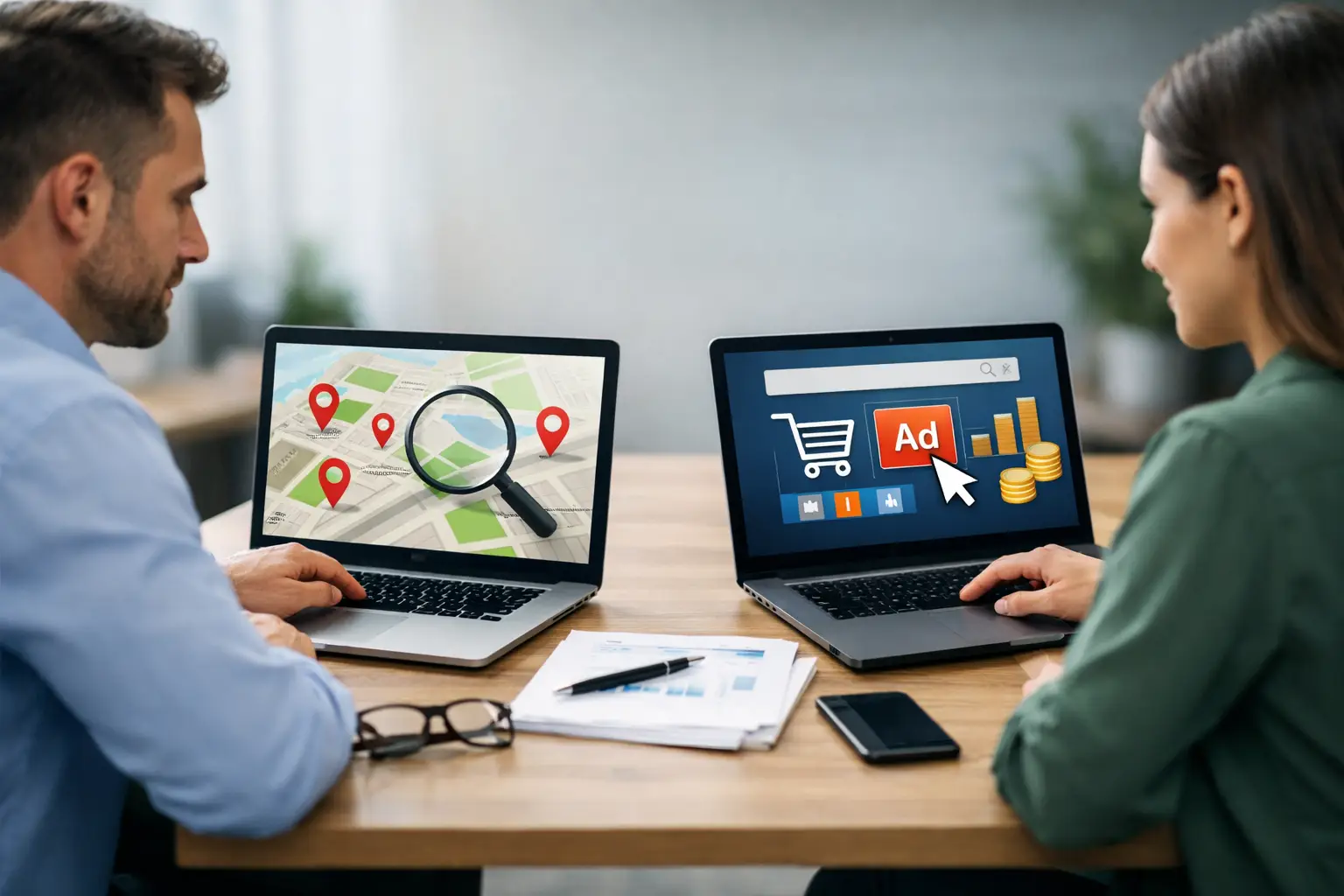
PPC puts you at the top of search results by paying for placement. Local SEO earns visibility in the organic local results and Google Maps by improving your website, Google Business Profile, local signals, and relevance for searches in your service area.
The practical difference is simple. PPC rents attention. Local SEO builds an asset.
That does not mean one is always better. It means they solve different business problems. If you need leads right now, PPC can be the fastest route. If you want to dominate your market over time and lower your dependence on ad spend, local SEO is the stronger long-term play.
When PPC makes more sense
PPC is built for speed. If you launch a campaign today targeting emergency AC repair, personal injury lawyer, or same-day plumbing service, you can start appearing for high-intent searches almost immediately.
That speed matters when your business is new, your phones are quiet, or you are entering a competitive market where ranking organically will take time. It also matters during peak seasons. An HVAC company in summer or a roofer after a storm often cannot wait six months for rankings to mature.
PPC also gives you sharper control. You can target by zip code, service, device, time of day, and even audience behavior. You can push high-margin services harder and pull back on lower-value ones. That level of precision is useful when you know your numbers and need volume now.
But there is a hard trade-off. The minute you stop paying, your visibility drops. In competitive industries, cost per click can rise fast, and weak campaign management turns budgets into expensive guesswork. More clicks do not always mean more qualified leads, especially if the account is broad, poorly structured, or missing local intent.
When local SEO makes more sense
Local SEO is the better fit when you want consistent lead flow without paying for every single visit. It helps your business show up in the map pack, localized organic results, and branded searches that influence trust before a customer ever calls.
For most service businesses, this is where the strongest long-term advantage is built. A well-optimized Google Business Profile, location-relevant service pages, accurate citations, strong reviews, and a fast mobile site can keep producing leads month after month. That is especially valuable for businesses with stable service areas and repeatable demand.
Local SEO also tends to improve lead quality. People who find a business through Maps or organic local search are often comparing nearby providers and are ready to act. They are not just responding to an ad. They are validating who looks credible, established, and close.
There is a patience requirement, though. Local SEO rarely delivers overnight. In tougher markets, it can take months to improve rankings and map pack visibility. If your business needs immediate pipeline relief, SEO alone may move too slowly.
Cost is not just budget – it is efficiency
A lot of business owners compare local SEO vs PPC by asking which costs less. That is the wrong first question. The better question is which creates profitable customer acquisition.
PPC often has a clearer short-term cost structure. You set a budget, pay for clicks, and track leads. That can feel more predictable, but the actual cost per lead may become painful in competitive industries like legal, medical, or home services.
Local SEO usually requires upfront investment in optimization, content, technical improvements, Google Business Profile work, review strategy, and ongoing local authority building. It may feel slower at first, but over time the cost per lead often improves because you are not paying Google every time someone clicks.
This is where many businesses make a costly mistake. They treat PPC as the growth engine and SEO as an afterthought. Then they wonder why lead costs stay high year after year. If every lead depends on ad spend, your marketing is always vulnerable to rising click costs and stronger bidders.
Lead quality and buyer intent
Not all leads are equal. That matters more than traffic volume.
PPC can capture urgent intent very well. Someone searching for “24-hour plumber near me” or “emergency dentist open now” may click the first ad and call within minutes. That is valuable traffic. In the right setup, PPC is excellent for bottom-of-funnel demand.
Local SEO often performs better for trust-driven selection. A homeowner comparing three roofers in Google Maps may look at reviews, photos, proximity, service descriptions, and website quality before making contact. The business that appears established and locally relevant has an edge.
For higher-ticket services, this trust factor matters. A personal injury firm, cosmetic practice, or major home service provider usually wins more business when prospects see a strong local brand presence, not just an ad. Organic visibility and map pack placement signal legitimacy in a way paid placement alone cannot fully replicate.
The smartest answer is often both
For many local businesses, the best answer to local SEO vs PPC is not either-or. It is sequencing and balance.
PPC can generate immediate lead flow while local SEO builds your long-term visibility. In that model, ads give you speed and testing data. SEO gives you staying power and lower dependency on paid traffic over time. Together, they create coverage across the search results page and increase the odds that your business gets the click.
This works especially well when you use PPC strategically instead of treating it like a permanent substitute for local SEO. Run ads for urgent, seasonal, or high-margin services. Use local SEO to strengthen your map pack rankings, service area relevance, and organic presence for the terms customers search every day.
A disciplined strategy also lets each channel improve the other. PPC data can reveal which service keywords actually convert. SEO can then focus on those terms, those locations, and those customer needs. Meanwhile, strong local SEO can reduce pressure on ad budgets by generating more unpaid leads.
How to choose the right priority for your business
If your business is new, has little organic visibility, or needs leads this month, PPC usually deserves early attention. It buys time while you build local SEO correctly.
If your business already has some traction, wants lower lead costs, and needs stronger visibility in Maps and local organic results, local SEO should be the priority. That is how you move from chasing leads to owning more of your market.
If you are in a highly competitive industry, the decision comes down to cash flow and patience. Businesses with healthy margins and urgent revenue goals can use PPC to create short-term demand while investing in SEO behind the scenes. Businesses with a longer runway should focus heavily on local SEO because the long-term payoff is stronger.
The key is not choosing based on hype. Choose based on your sales cycle, service urgency, competition, and customer value. An emergency locksmith and a family law attorney should not make the same call in the same way.
What strong execution actually looks like
Neither channel works well with half-effort execution. PPC needs tight keyword targeting, smart geographic settings, strong landing pages, call tracking, and constant optimization. Local SEO needs serious work on your Google Business Profile, review acquisition, on-page local relevance, technical site health, and location authority.
That is why specialist execution matters. A generic agency may run ads or publish blog posts, but that is not the same as building local search dominance. For businesses that rely on calls, appointments, and booked jobs, the real goal is simple: show up where nearby buyers are searching and give them every reason to choose you.
FMS Online Marketing is built around that outcome for local service businesses that want more than basic marketing support. The advantage comes from focusing on local search performance where real buying intent lives.
If you are deciding between PPC and local SEO, do not ask which tactic sounds better. Ask which one helps your business win more qualified local customers at a cost that supports growth. The strongest strategy is the one that gets you leads now without forcing you to rent your visibility forever.