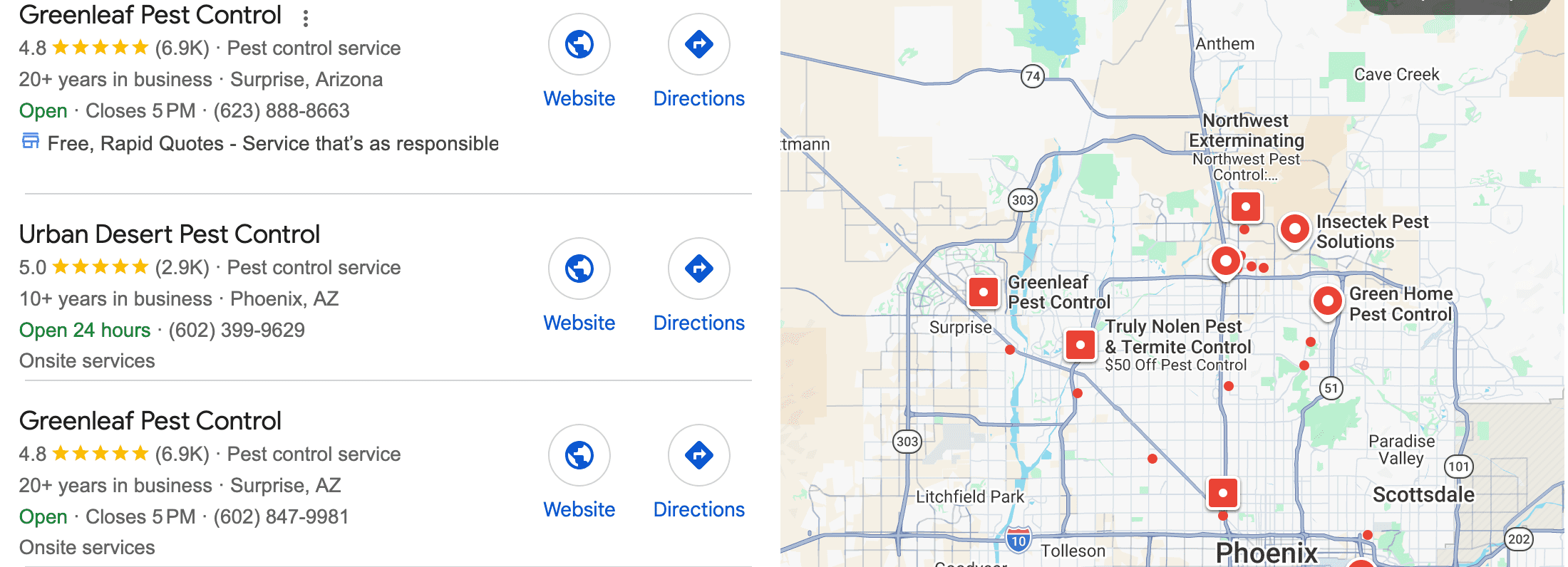
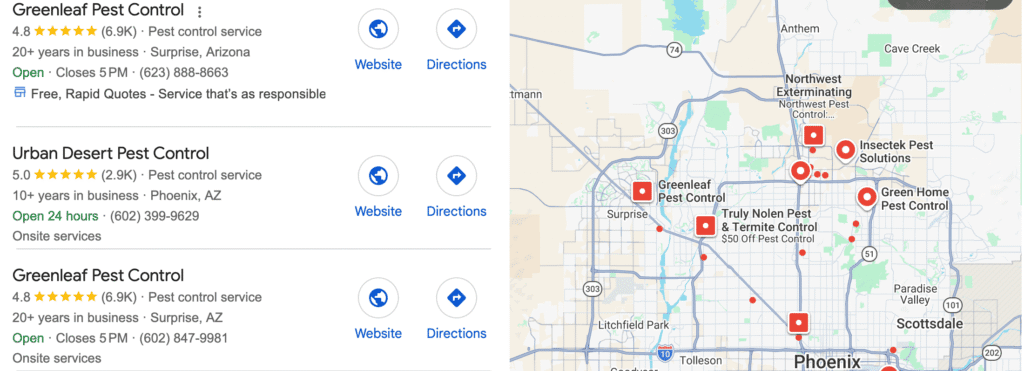
When someone searches “plumber near me” or “HVAC repair” from a phone, they are not browsing for fun. They need help now, and Google knows it. That is why the Map Pack sits above most organic results and captures some of the highest-intent clicks, calls, and direction requests in local search. If your business is not showing there, your competitors are getting the leads you should be closing.
If you want to know how to rank in Google Map Pack results, the answer is not one trick. It is a system. Google looks at relevance, distance, and prominence, but those broad categories are shaped by dozens of practical signals you can control. The businesses that win are usually the ones with a fully optimized Google Business Profile, strong local website signals, real reviews, and consistent business data across the web.
How to rank in Google Map Pack starts with your Google Business Profile
Your Google Business Profile is the center of local visibility. If it is incomplete, inaccurate, or barely managed, your chances of breaking into the top three are slim. Google wants confidence. It wants to see that your business is real, active, and closely matched to what searchers want.
Start with the basics and get them right. Your business name should reflect your real-world brand, not a string of keywords. Keyword stuffing can work for some listings in the short term, but it is risky and often unstable. Businesses that want lasting rankings should build on clean, compliant signals instead of gambling with suspensions.
Your primary category matters more than most owners realize. It tells Google what your business is mainly about, so choose the category that best matches your highest-value service. Secondary categories help fill in the picture, but they do not replace a strong primary choice. A roofing company, for example, should not lead with “contractor” if “roofing contractor” is available and more precise.
Complete every meaningful field in your profile. Add services, service areas, hours, business description, products if relevant, and real photos. Profiles with stronger completion tend to perform better because they give Google more context and give searchers more reasons to engage.
Relevance is built through category, service, and content alignment
A lot of local businesses optimize their profile and stop there. That leaves rankings on the table. Google compares your Business Profile with your website, your reviews, and third-party mentions to decide whether your business is truly relevant for a search.
That means your website needs to reinforce the same services and locations you want to rank for. If your profile says you offer drain cleaning, water heater repair, and emergency plumbing, your website should clearly support those services with dedicated content. If you serve multiple cities, those cities should be reflected in your site architecture, not buried in a footer.
This is where many agencies miss the mark. They treat local SEO like generic SEO with a city name added in. That is not enough in competitive service industries. If you want Map Pack visibility, your site needs local intent baked into the content, title tags, internal links, and page structure.
Build location and service pages that support Maps rankings
You do not need thin pages for every zip code. You need useful pages for the services and markets that matter most. A strong service page explains the job, the problems you solve, the areas you cover, and why customers trust you. A strong location page connects that service to a real local market with specific context.
There is a trade-off here. Going too broad weakens relevance. Going too narrow creates low-value pages that do not rank or convert. The right structure depends on your service area, competition, and how your business actually operates.

Reviews are not optional if you want to win local search
Reviews affect both rankings and conversions. They help Google understand prominence, and they help customers decide who gets the call. A business with 12 reviews and a stale profile is at a disadvantage against a competitor with 150 recent reviews that mention real services and real locations.
Quantity matters, but quality and recency matter too. Ask customers to mention the service they received and, when natural, the city or neighborhood. Those review terms can strengthen relevance for local queries. Do not script every review so tightly that they all sound fake. Google and customers can spot that.
Just as important, respond to reviews. Your responses show activity and professionalism. They also give you another chance to reinforce service terms in a natural way. A reply that says, “Thanks for trusting us with your AC repair in Tampa,” sends a clearer local signal than “Thanks for your business.”
NAP consistency still matters, even if it is not the whole game
Your name, address, and phone number need to match across your website, Business Profile, and major business directories. This is not the flashy part of local SEO, but it reduces confusion and strengthens trust signals.
Inconsistent citations can dilute authority, especially for businesses that have moved, changed numbers, or used call tracking incorrectly. Call tracking itself is not the problem. Poor implementation is. If you use tracking numbers, keep your core business data stable and structured correctly.
For service-area businesses, this gets more nuanced. You may hide your address in Google while still maintaining consistent citation data where appropriate. The key is to follow platform rules and avoid creating a messy footprint that sends mixed signals.
Behavioral signals can push you up or hold you back
Google pays attention to how people interact with your listing. If searchers click your profile, call your business, request directions, visit your website, and spend time engaging with your brand, that is a positive sign. If they skip your listing and choose someone else, it tells Google something too.
That is why ranking is only part of the job. Your listing has to earn action. Strong photos, a compelling business description, accurate hours, service details, and regular updates all improve the odds that someone will choose you.
Google Posts are not usually a silver bullet for rankings, but they can help keep your profile active and improve engagement. The same goes for fresh photos and Q&A management. On their own, these may not move you from position eight to position three. Combined with stronger authority and relevance, they can help close the gap.
Proximity matters, but it does not make optimization pointless
One of the most frustrating parts of local SEO is that proximity is real. A searcher on one side of town may see a different Map Pack than someone a few miles away. You cannot control where the search happens, and no honest agency should promise universal rankings everywhere in your metro.
What you can control is how competitive your business looks when Google compares nearby options. Strong optimization expands your visibility across more local searches and helps you rank better in the areas where you are realistically eligible. That is especially important for businesses in crowded markets where every signal counts.
Local authority grows when your website earns trust
Map Pack rankings are not isolated from your site authority. Businesses with stronger local backlinks, better branded search demand, and more useful local content often outperform weaker competitors even when both have decent profiles.
That does not mean you need a national link-building campaign. It means you need relevant authority. Local sponsorships, industry associations, chambers of commerce, trade organizations, and local press mentions can all support local prominence. A solid website with technical health, fast mobile performance, and clear service content strengthens the full picture.
Common mistakes that keep businesses out of the top three
A lot of businesses do most things halfway and wonder why rankings stall. They claim the profile but never optimize it. They collect a few reviews but stop asking. They build a homepage that targets every city and every service at once, which usually means it ranks for none of them very well.
Another common issue is category mismatch. If your main category is too broad or just wrong, Google starts with the wrong assumption about your business. Spam fighting is another overlooked piece. In some markets, competitors use fake listings, keyword-stuffed names, or virtual offices to gain an edge. Cleaning up your own profile will help, but in highly competitive verticals, monitoring the local landscape matters too.
And then there is inconsistency. Local SEO is not a one-time setup. Reviews slow down, business details change, competitors get more aggressive, and Google updates how it evaluates local results. If you are not actively managing your local presence, you are usually losing ground.
The businesses that rank in Google Map Pack treat it like a revenue channel
If you are serious about how to rank in Google Map Pack results, stop treating Google Business Profile as a side task. It is a lead generation asset. For service businesses, it can be one of the highest-converting assets you own because it reaches people at the exact moment they are ready to act.
That is why the best results come from a connected strategy. Optimize the profile. Align the website. Build location relevance. Generate reviews consistently. Strengthen citations. Improve engagement. Add local authority over time. That is how businesses move from being another option in the market to dominating local search results.
At FMS Online Marketing, that is the work that drives calls, booked jobs, and measurable growth for businesses that rely on local demand. If your competitors keep showing up in the Map Pack, there is a reason. The good news is that rankings can change when the strategy does.
The next lead in your market is already searching. Make sure Google has every reason to put your business in front of them. Call or text us at (623)687-1673 or contact us through our website to schedule a free consultation.